Thai driving test practice questions, decoded.
Try a free exam-style Thai driving test question in English, then choose a topic or find your weak spots with the diagnostic.

Try a free question.
Parking & distance
When parking on a two-way street, which of the following is correct?
Show answer & explanation
Correct answer
A · Park close to the left-side curb, with the vehicle facing the same direction as traffic flow.
Thai law requires vehicles to park close to the left curb and aligned with the direction of traffic. Parking facing oncoming traffic or far from the curb is not permitted.
Six topic deep-dives
Pick the topic you want to drill.
Each topic has hand-picked exam-style questions, an explanation of the wording trap behind them, and a quick FAQ. Tap a card to start.

Road signs
The common Thai road-sign families, grouped by what their shape and colour mean.
Motorcycle
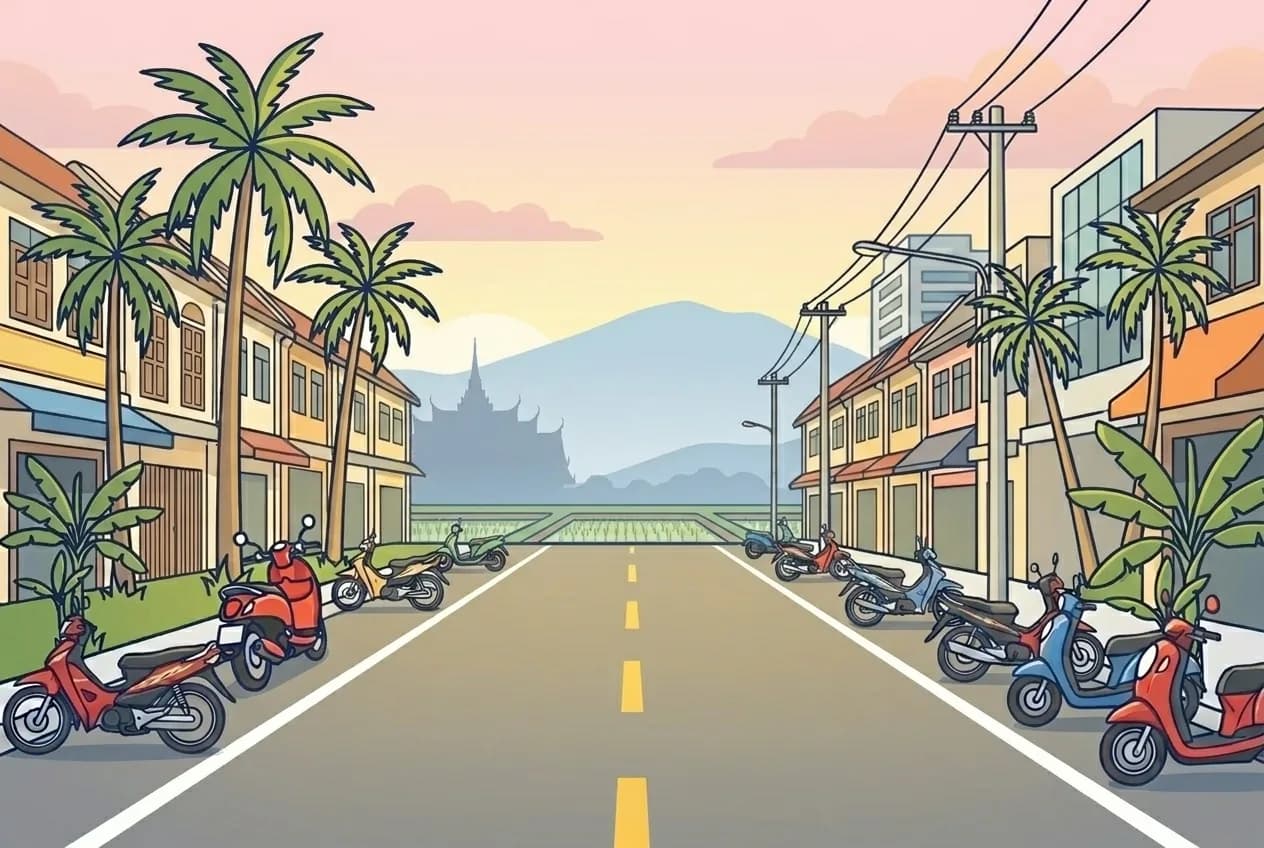
Motorcycles are everywhere on Thai roads, and a chunk of the theory test asks how cars should handle them, and how riders should behave around cars.
Parking & distance
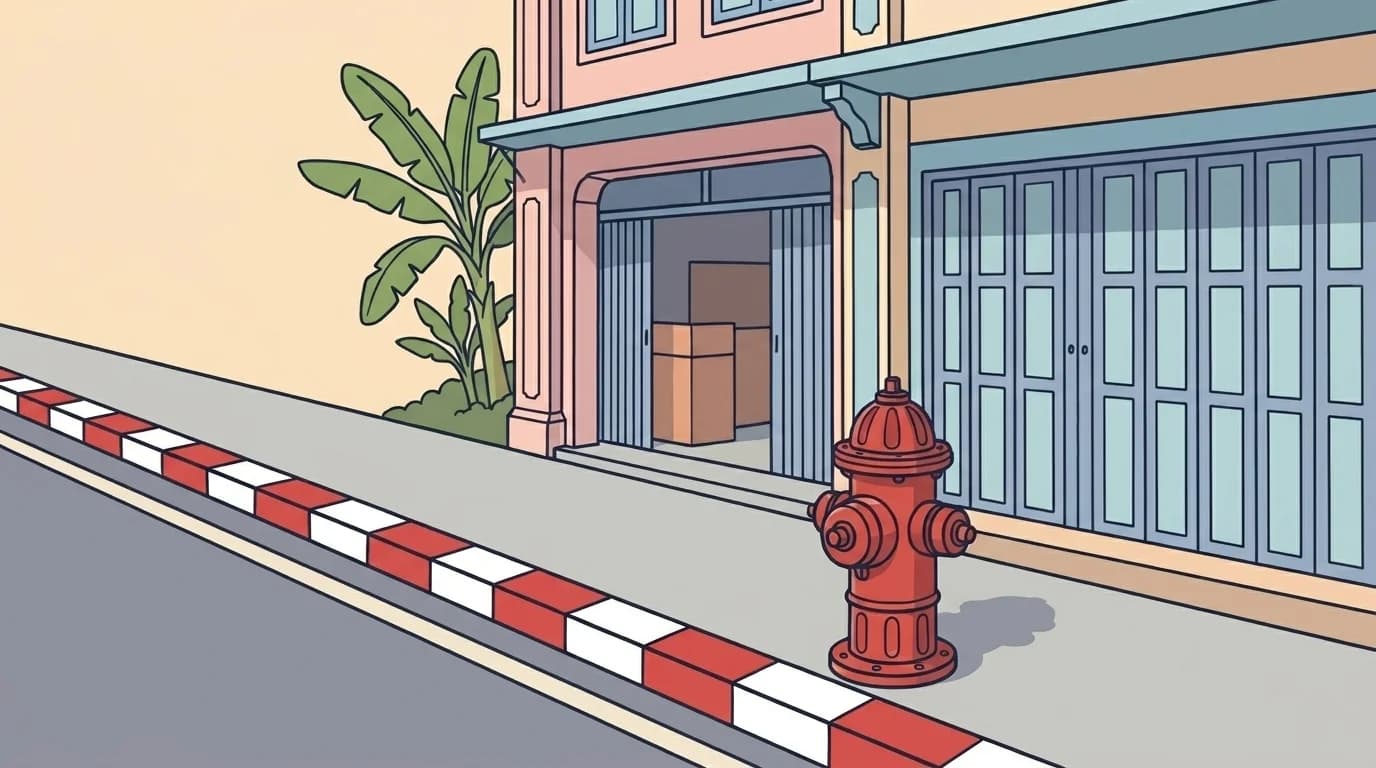
The Thai theory test loves exact metres.
Right of way
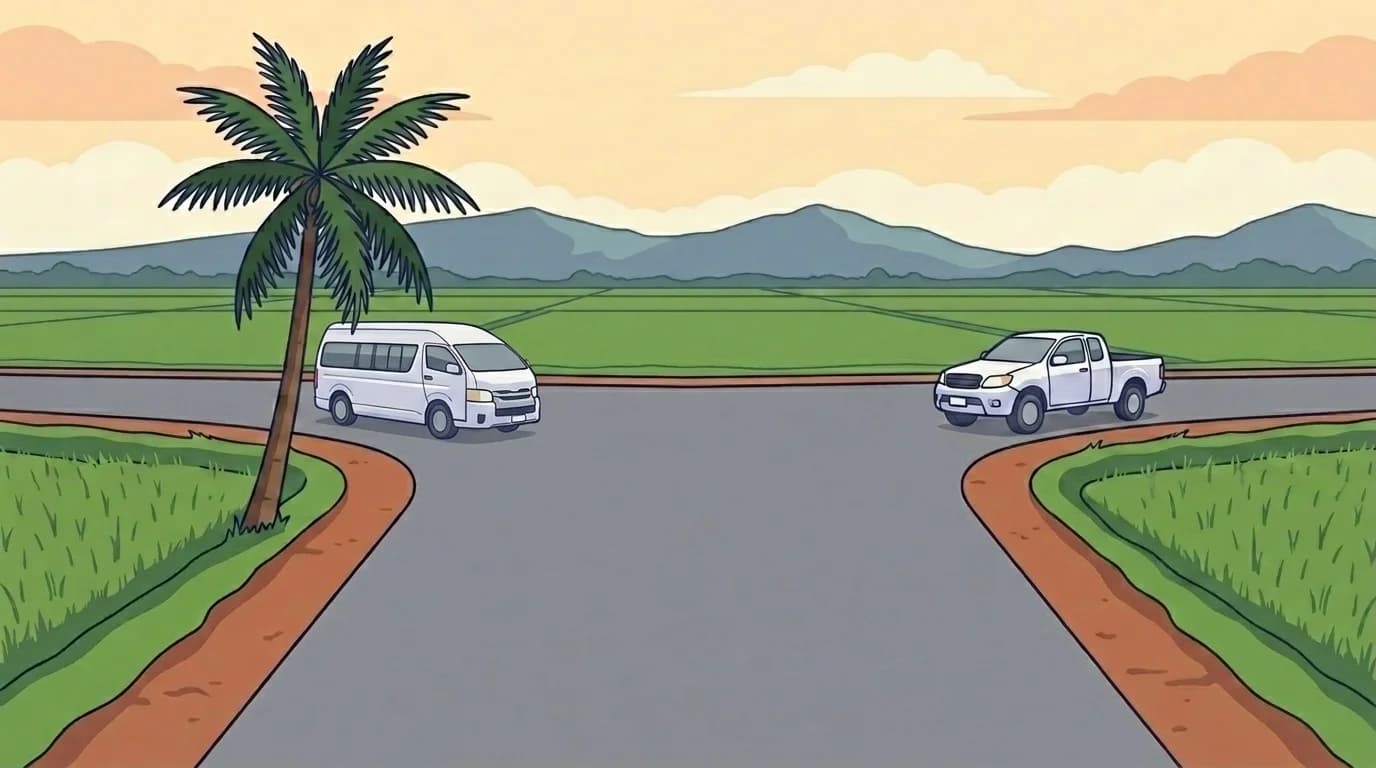
Junctions, roundabouts, merges, emergency vehicles.
Overtaking
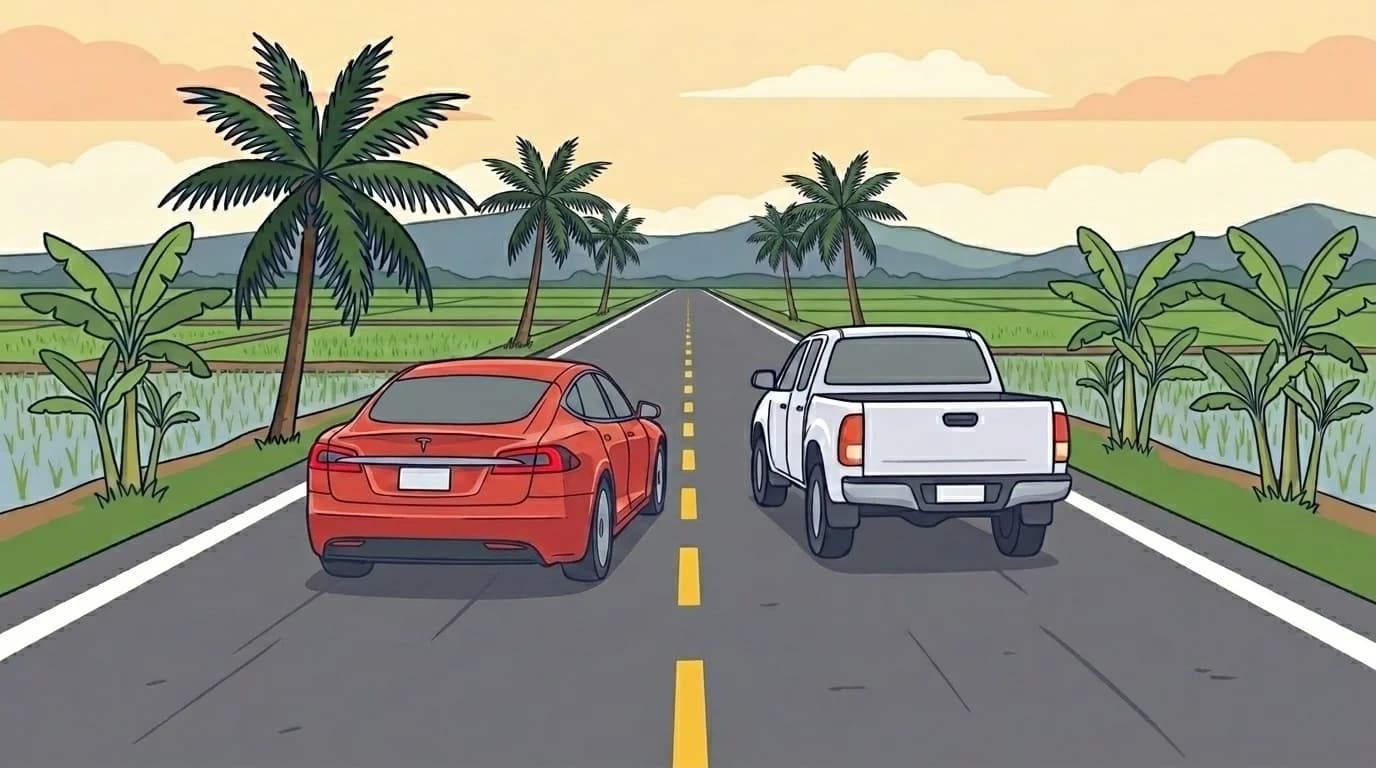
When you're allowed to pass, when you're not, and the visibility numbers the wording quietly relies on.
Hazards & emergencies
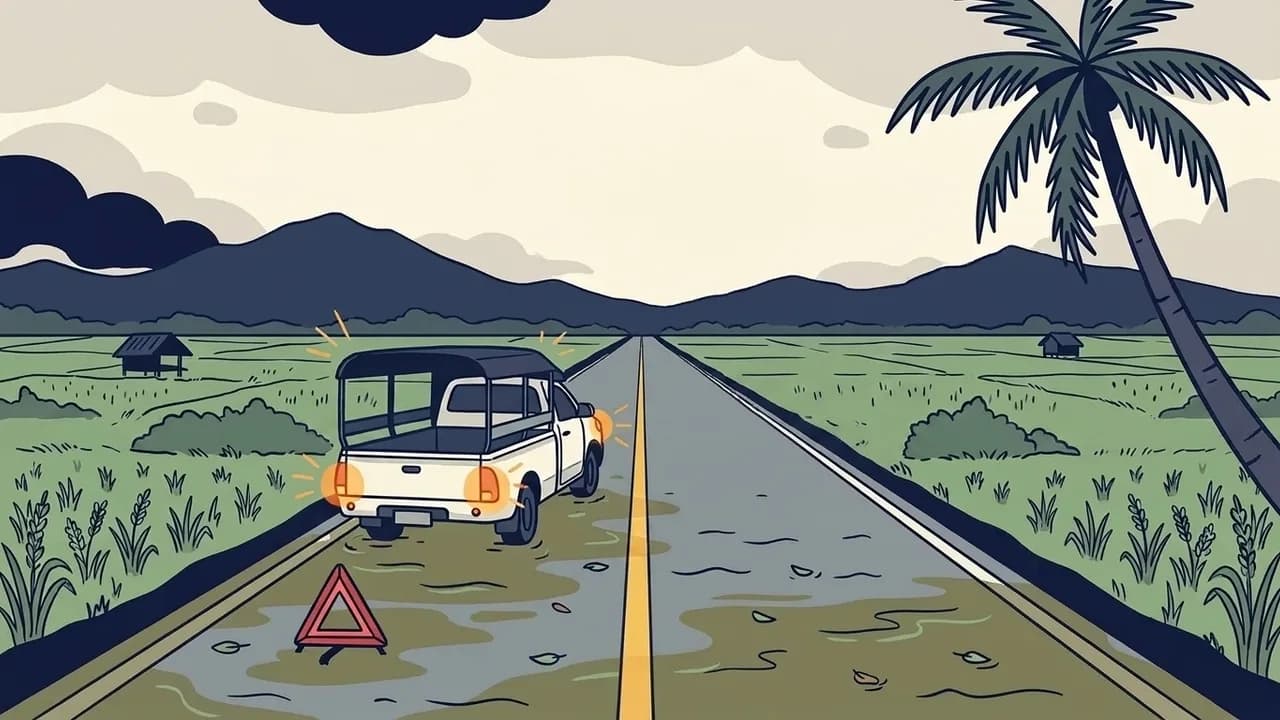
Tunnels, school zones, level crossings, breakdowns, floods.

Tricky questions · Full Access
Stop translating. Start spotting.
Full Access adds Tricky questions: short sets drawn from the questions other learners miss most. Every answer has a plain-English explanation of the rule or wording trap. Questions you miss can return in a later set.
FAQ
What people ask about the questions.

How many questions, and what's the pass mark?
The standard private car or motorcycle theory test is a computer-based multiple-choice exam with 50 questions. Public-service guidance lists 45 correct answers as the pass mark, so treat 45/50 as the line to clear.Are the Thai driving test questions multiple choice?
Yes. The Thai DLT theory test is computer-based multiple choice, usually four answer options per question and a single correct answer. There are no written or short-answer sections.What topics are on the Thai driving theory test?
Expect road signs, traffic rules, right-of-way, parking and following distances, overtaking, hazard situations, and vehicle-category details such as motorcycle rules when you book a motorcycle slot. FarangDrive groups practice questions around those recurring areas so you can drill the topics you keep missing.Are these the actual Thai theory test questions?
No, and nobody can sell you those. The official question bank isn't public. FarangDrive uses realistic exam-style questions based on common test topics and public guidance, with the wording decoded.What is FarangDrive's Tricky questions mode, and who can use it?
Full Access includes Tricky questions, short practice sets drawn from the questions other learners miss most. Every answer has an explanation, and the ones you miss can return later. The free diagnostic instead finds your weak topics. Once you've answered every free question, a one-off Tricky questions challenge may become available.Why does the wording on the Thai theory test feel so literal or stiff?
English test wording often follows Thai legal and exam phrasing closely, so distance phrases, exception clauses, and right-of-way wording can feel literal. Practising exam-style English in advance helps because the same trap patterns repeat.How long does it take to prepare for the Thai driving theory test?
It depends on your driving background and English comfort. Many foreign-licence candidates use FarangDrive as a focused one- or two-day review: run the diagnostic, practise weak topics, review the road signs and markings, then take a timed test. If traffic-rule vocabulary is new to you, leave more time.
Ready to find your weak topics?
The diagnostic flags your weak topics in 5 minutes. Then you only practise the ones you'd otherwise lose points on.