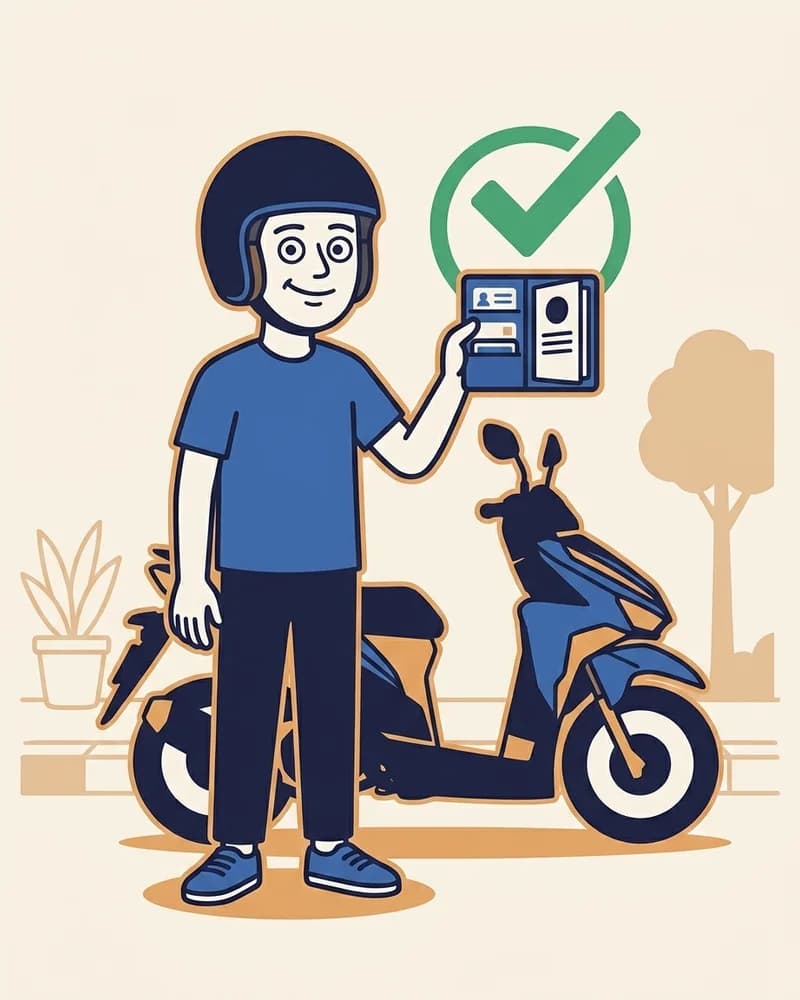
Stopped by police in Thailand? Know the next move.
At a routine scooter checkpoint, show a motorcycle licence valid in Thailand, any required International Driving Permit (IDP), and the vehicle-registration copy. No valid licence can mean up to 1,000 baht; no helmet is separate at up to 2,000 baht. These are legal maximums—ask for the ticket and receipt.
Independent general information · Last checked
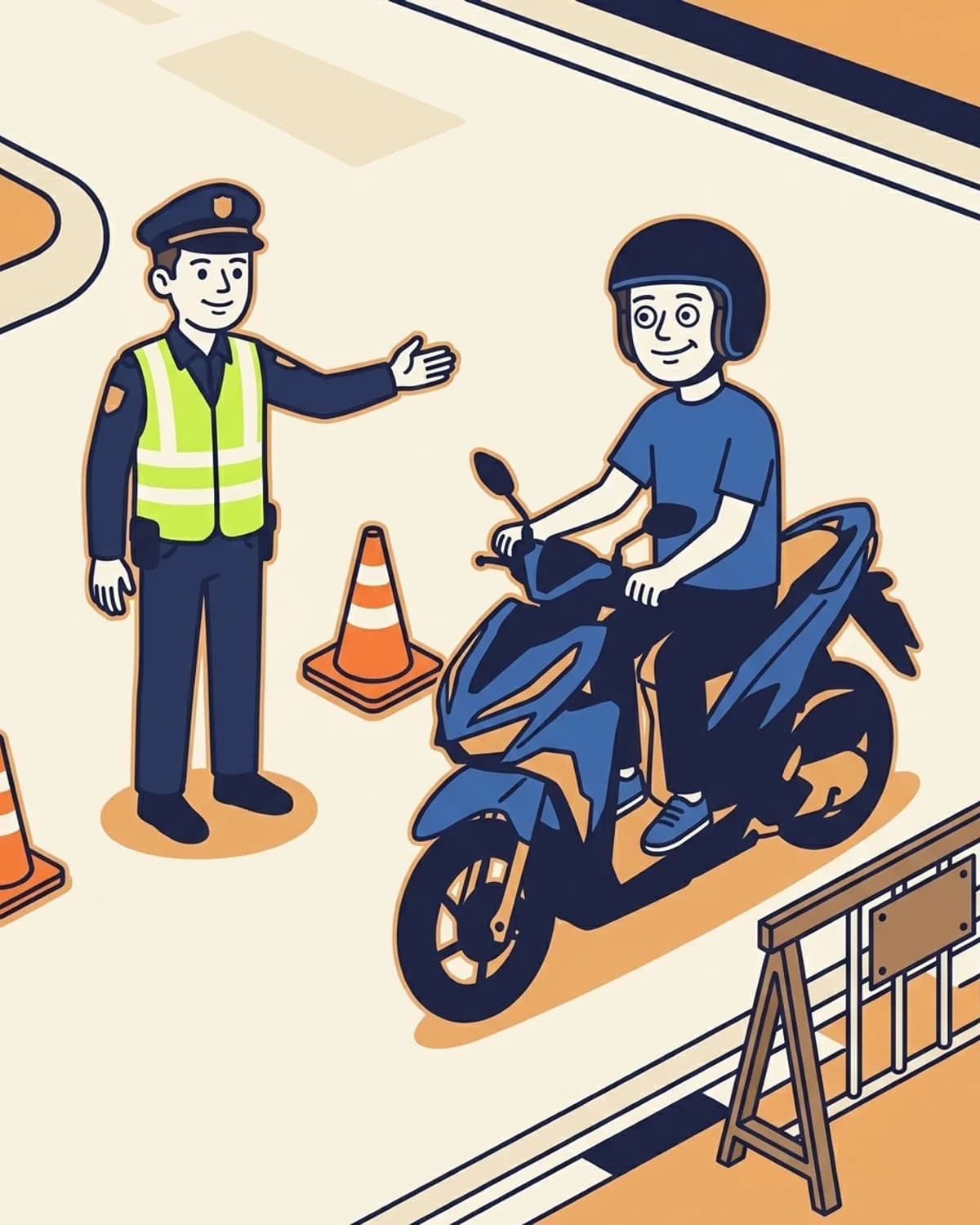
Stopped now?
First, keep the stop simple.
Work left to right. Make the stop safe, calm, and easy to understand.
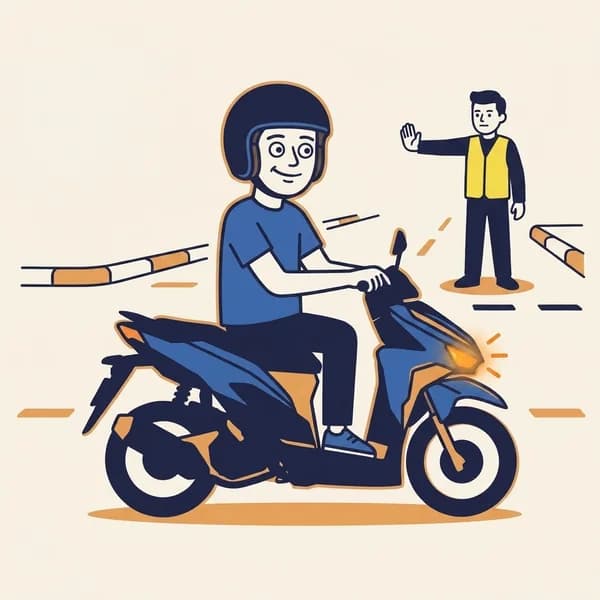
Signal and slow down
Slow down safely and indicate when an officer signals you to stop.
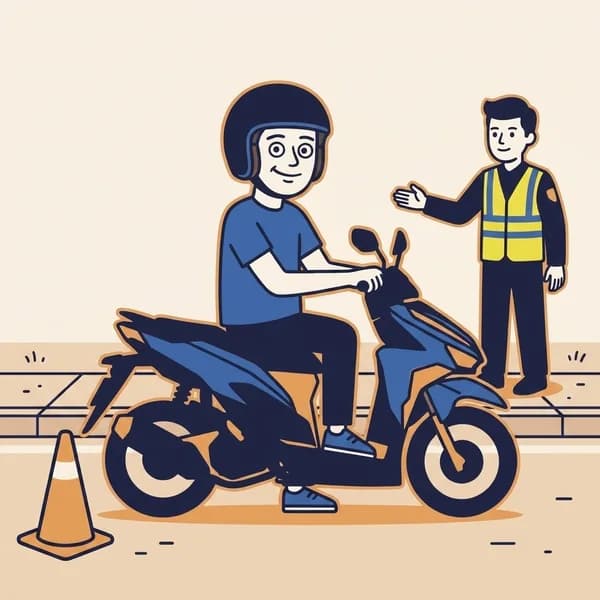
Stop where directed
Pull over where directed, secure the vehicle, and switch off the engine.
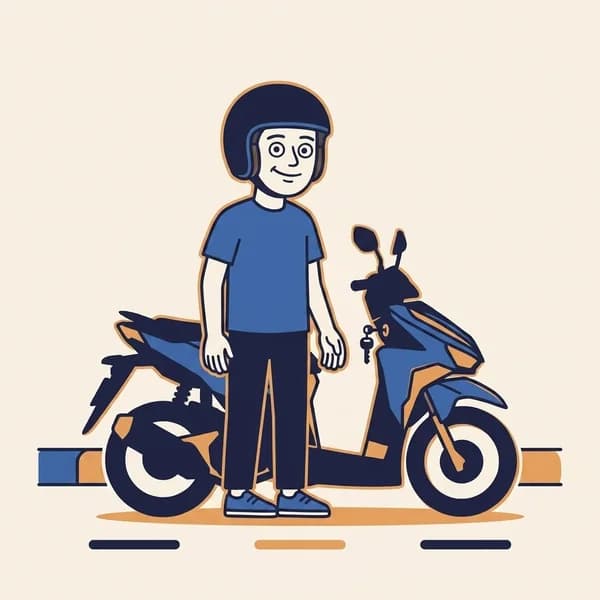
Stay calm and visible
Keep your hands visible. Say if you do not understand.
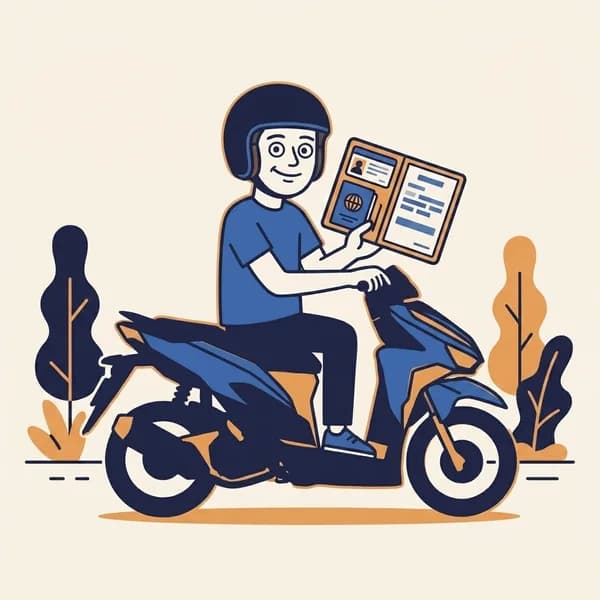
Show the documents
Prepare your original licence, any required IDP, and the vehicle papers.
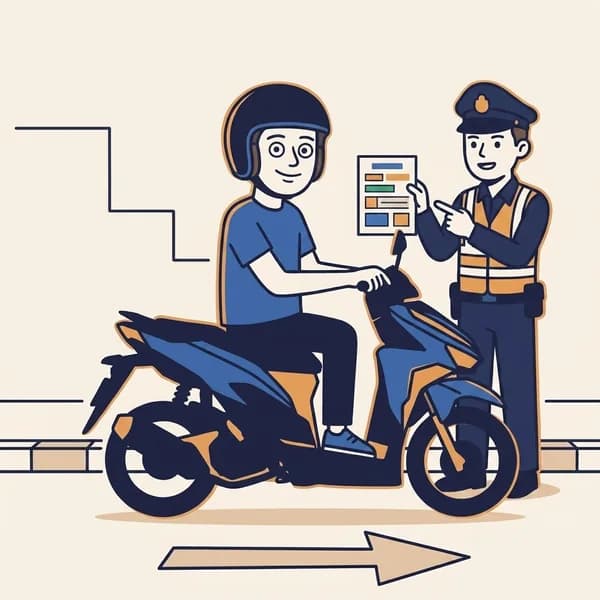
Confirm the next step
Before leaving, confirm whether the check is over or a ticket was issued.
Documents
Keep these four things together.
Keep the right licence and vehicle papers together.
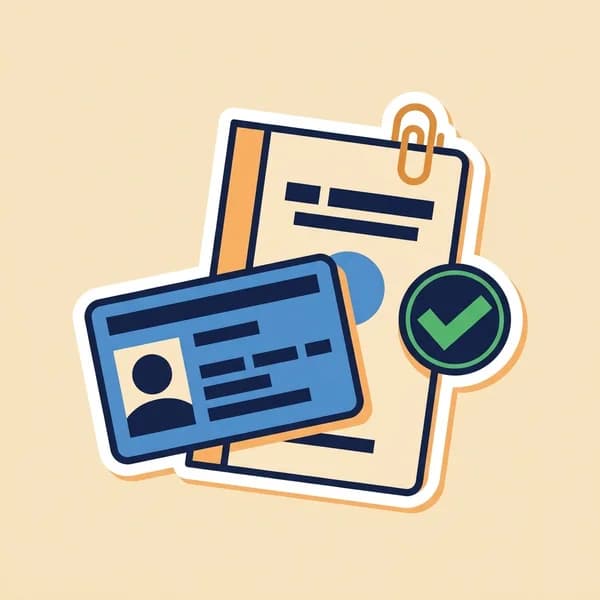
Rider documents
Original licence + IDP, if required
An International Driving Permit (IDP) translates your licence; it is not a licence by itself. Carry it with the matching original, and make sure both cover motorcycles.
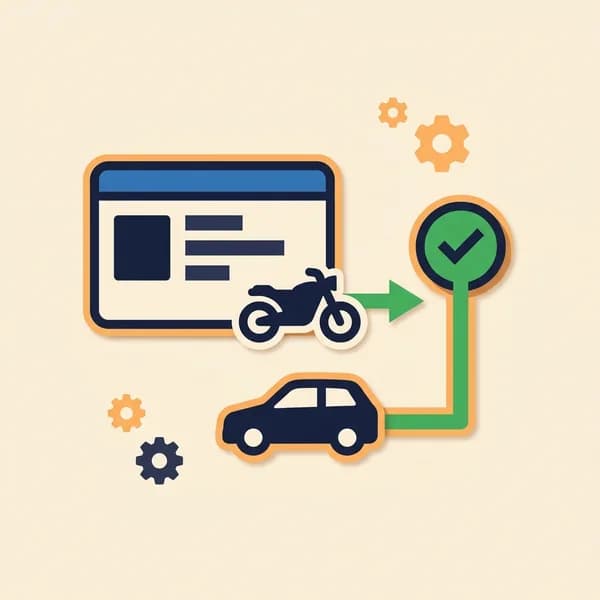
Motorcycle category
Motorcycle category
A licence category is the vehicle type you may drive. A car category does not cover a scooter; check your licence and IDP.
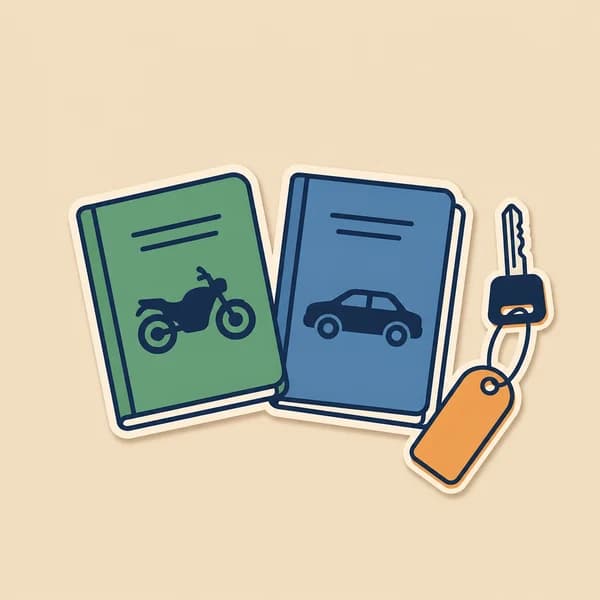
Vehicle registration
Vehicle registration book copy
Motorcycle books are commonly called Green Books and car books Blue Books. They identify the owner and vehicle. On a rental, carry a clear copy matching the plate; the owner keeps the original.
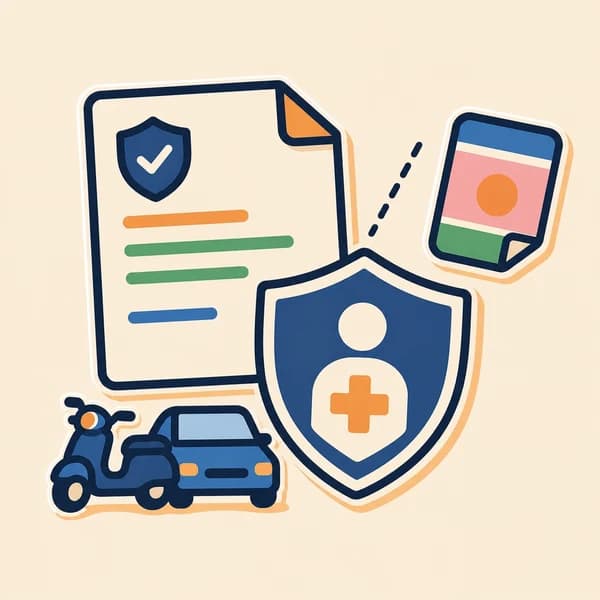
Compulsory insurance
Compulsory insurance proof
Por Ror Bor is compulsory road-accident cover for injury or death—not vehicle damage. Ask for proof matching the plate. The separate annual tax sticker shows tax was paid; optional insurance is another policy.
Typical checkpoint issues
What can the ticket cost?
These are legal maximums, not fixed checkpoint prices. Separate offences can be added.
Up to ฿1,000
No licence valid for the scooter
฿1,000 is the maximum allowed by law, not a fixed nationwide price. Thai law also allows up to one month in prison. Payment does not legalise the next ride.
Up to ฿2,000
Rider without a helmet
No helmet is separate from a licence charge. An unhelmeted passenger can increase the driver’s penalty.
Up to ฿1,000
No registration-book copy
The owner keeps the original Green or Blue Book; a clear copy should travel with the vehicle.
Up to ฿10,000
No compulsory insurance
Missing proof is not no policy. If the vehicle is uninsured, owner and user have separate duties—call the rental company.
If the checkpoint is busy
If scooters are already parked, ask where yours should wait and who may collect it. Before getting cash, confirm the ticket amount and instructions. No national rule requires cash there or a trip to an ATM.
Traffic tickets
Got a ticket? Read this before you pay.
Your ticket sets the offence, amount, due date, and next step.

Step 1
Check the ticket
Check your name, plate, offence, place, date, police unit, and number.
Step 2
Find the due date
The form allows up to 30 days. Use the date on your ticket.

Step 3
Use a listed payment method
Use a police station, bank, ATM, online, or other channel listed on the ticket. Get a receipt.

Step 4
Keep the paper trail
Save the ticket and receipt. To dispute it, follow the printed instructions.
No cash right now?
Do not confuse payment with permission to ride.
No cash and no valid scooter licence are different problems. Clarify both before the checkpoint closes.
Payment
Ask for the ticket
Get the amount, deadline, instructions, and station. Some eligible non-criminal fines allow instalments; ask the unit on the ticket or court. A no-licence case may differ.
Rider
Ask who may move the scooter
If your licence does not cover the scooter, ask whether a licensed friend or the rental company may collect it.
Rental
Call the rental company
The owner can supply papers and arrange collection. Your ticket, towing, and storage fees may be separate.
If held
Get the holding details in writing
A ticket does not mean the scooter is held indefinitely. Get the location, reason, and what must happen before release in writing.
Tourist Police 1155
Visitor help when language gets in the way.
Tourist Police is a police unit for visitors. Its 24-hour 1155 hotline offers multilingual help when language or the next step is unclear—not ticket cancellation.
Why call at a traffic stop?
The operator can help both sides communicate. Give your location or nearest landmark and ticket details.
Ask for the official process
If money is requested, ask for the ticket, named police unit, and listed payment method.
Report misconduct when safe
Note the time, place, police unit, ticket number, witnesses, and evidence. Use the Royal Thai Police online complaint portal.
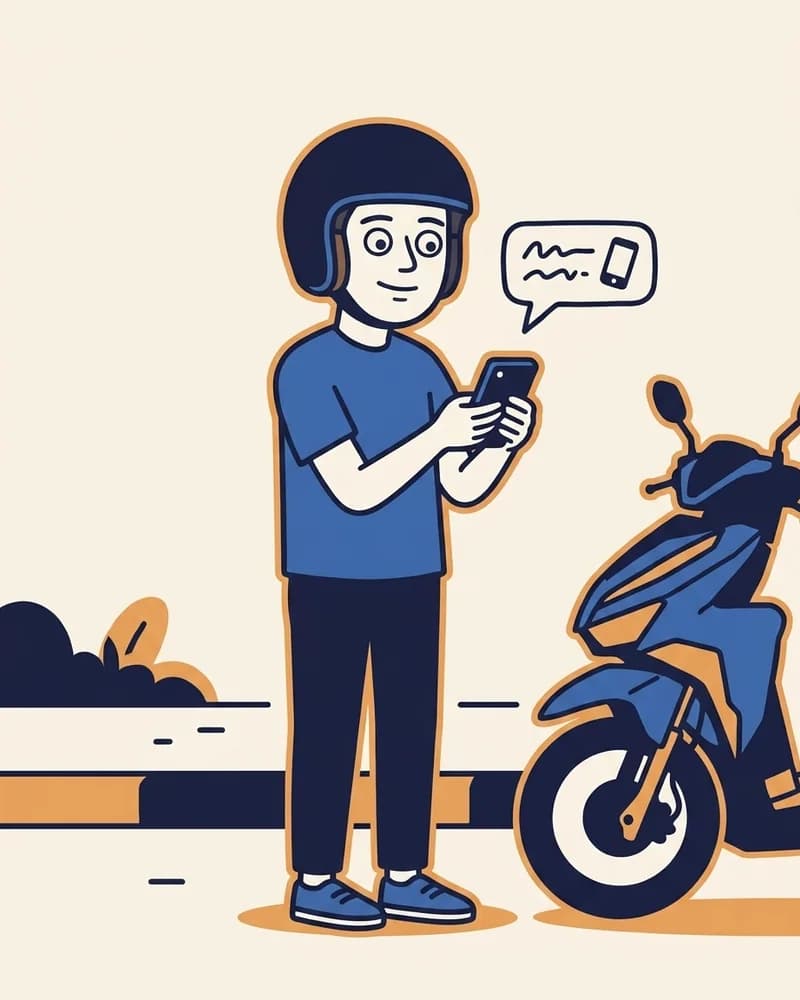
Prevent the repeat
Fix the problem before the next ride.
Payment does not add a vehicle category or renew an invalid document.

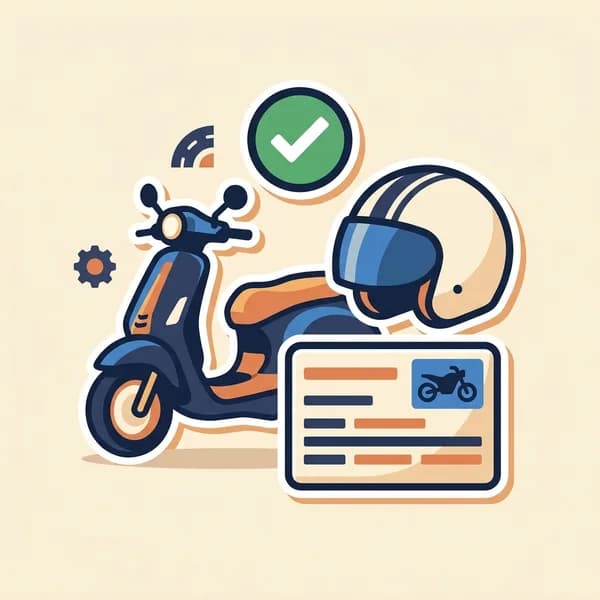


How we checked it
Law first. Roadside stories second.
Checkpoints vary by place. Official sources set the rules; traveller reports help us cover the situations people actually meet.
Independent general information · Last checked .
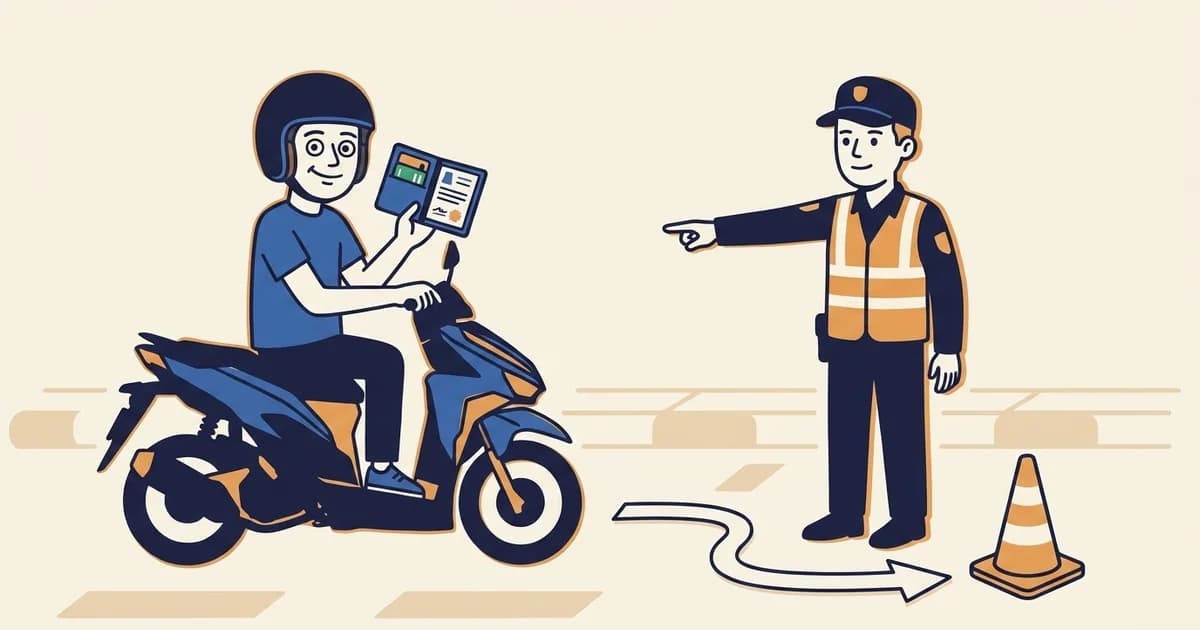
Official rules first
Thai law, transport authorities, and police sources set the facts and maximum fines.
Roadside stories add context
Rider reports show what can happen. They do not create rights or fixed prices.
Checked and dated
Every official link below was rechecked for this guide.
Show all 17 official references
General information, not legal advice. Arrests, searches, crashes, drink-driving, drugs, immigration, or criminal charges need case-specific help.
Law
Royal Gazette: Road Traffic Act amendment No. 10 (2014)Law
Royal Gazette: Road Traffic Act amendment No. 12 (2019)Law
Royal Gazette: Road Traffic Act amendment No. 13 (2022)Law
Royal Thai Police: Consolidated Road Traffic ActLaw
Office of Insurance Commission: Consolidated Road Accident Victims Protection ActLaw
Royal Gazette: Current traffic-ticket notice and forms (effective 4 August 2025)Official service
Royal Thai Police: Traffic-ticket warning and official payment informationGuidance
Department of Land Transport via Thailand.go.th: Temporary driving licence guidance for foreign touristsGuidance
Department of Land Transport legal bureau: Official summary of the Motor Vehicle ActGuidance
Royal Thai Police: Helmet duties for riders and passengersGuidance
Royal Thai Police: Official guidance on Pinai fines and inability to payGuidance
Department of Land Transport legal bureau: DLT interpretation on carrying a vehicle-registration copyGuidance
Department of Land Transport: Vehicle-registration book identity detailsGuidance
Department of Land Transport: Annual vehicle-tax mark rulesOfficial service
Thailand Tourist Police: Tourist Police visitor-safety and assistance roleOfficial service
Royal Thai Police Inspector General: JCoMS complaint and misconduct-reporting systemGuidance
Thailand Tourist Police: 24-hour, eight-language 1155 support
Real checkpoint questions
The questions people actually ask.
What happens can vary by place and officer. Here is what riders report—and what you should not rely on at the next checkpoint.
Is the no-licence fine always 1,000 baht?
No. ฿1,000 is the legal maximum, not a fixed checkpoint price. Thai law also allows up to one month’s imprisonment, so roadside payment is not the only possible outcome.Is an International Driving Permit enough by itself?
Do not rely on it alone. Carry it with the matching original licence, and make sure both cover motorcycles.Does my car licence cover a scooter in Thailand?
Do not assume it does. Check that your original licence and any required IDP both cover motorcycles.Is no helmet charged on top of the licence issue?
Yes. A licence problem plus no helmet can mean two charges. The helmet ceiling is ฿2,000.Must I pay cash immediately at the checkpoint?
No universal rule. Use the payment method on the official ticket: police station, bank, ATM, or online channel. Get a receipt.What if I cannot pay before the checkpoint closes?
Ask where the scooter and keys will stay, which station issued the ticket, and who may collect it. If it is rented, call the shop before you walk away.What should I do if a rented scooter has to stay behind?
Call the rental shop. The owner has the registration papers and can send someone licensed to ride it. Ask police for the location, reason, and what must happen before release in writing.Is missing a Por Ror Bor card the same as no insurance?
No. Por Ror Bor covers road-accident injury or death; the tax sticker and optional insurance are separate. Ask the rental shop for current proof matching the plate. If it cannot verify cover, stop riding.Who can help if the officer and I cannot understand each other?
Tourist Police is Thailand’s visitor-assistance police unit. Call 1155 for multilingual help when the language or next step is unclear. Give your location and ticket details; it can help communication, not cancel or negotiate the fine.Does paying a ticket mean I can keep driving?
At that checkpoint, sometimes: some riders report getting their keys back after the ticket is handled. That does not make the receipt a temporary licence or legal grace period. If your licence is not valid for the scooter, riding remains illegal and the next checkpoint may stop you again.
Fix the licence path before the next ride.
Missing category or unsure about the rules? Fix it before the next ride. The free diagnostic shows which theory topics need attention.