Thai road markings, explained in English.
Every painted kerb colour and every line on the asphalt: what each means in plain English and what you must do. Skim before the test, screenshot for the kerb.

Kerb colours
Painted kerbs in three colours.
Painted kerbs use three colours to show whether you may stop, briefly drop off, or must keep moving. Which way you face when parking is a separate rule, illustrated by this parking practice question.
Yellow-and-white kerb
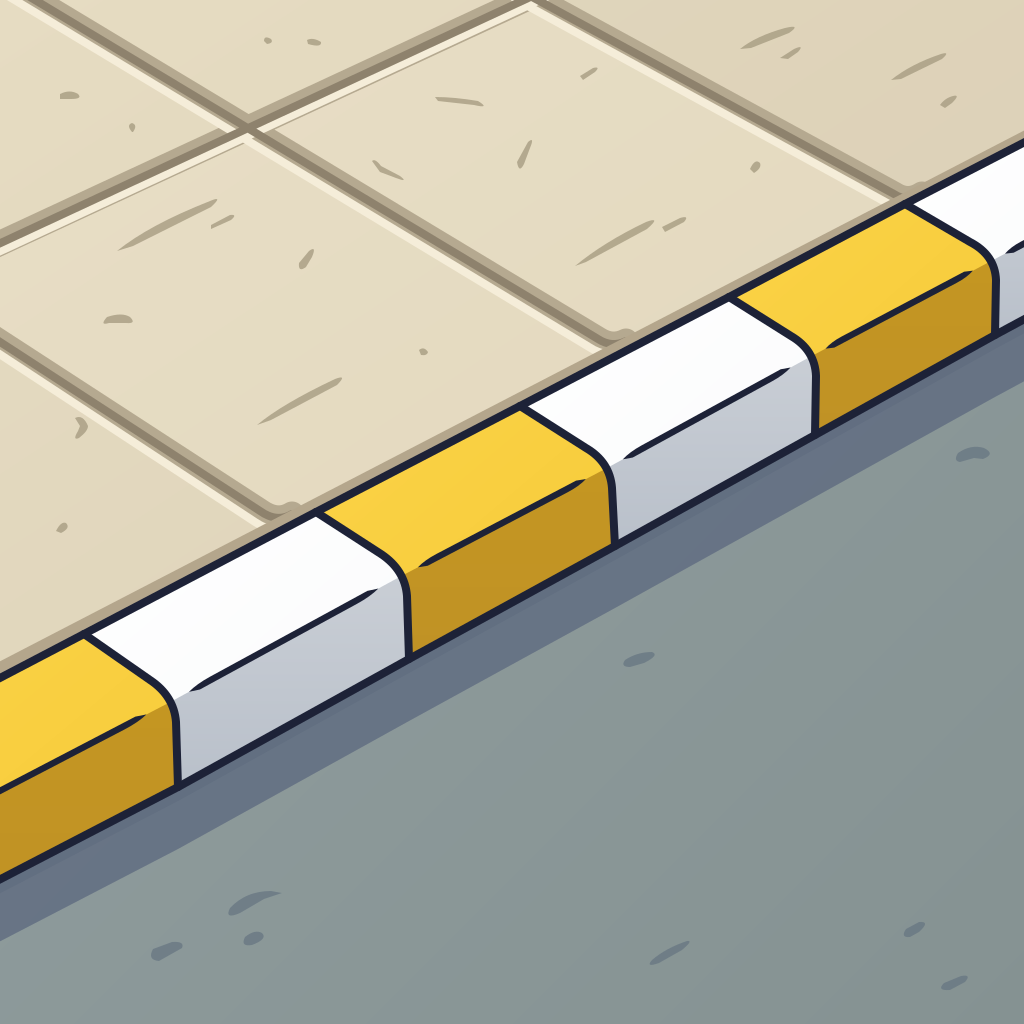
A yellow-and-white painted kerb in Thailand means no parking along that stretch of road, day or night.
You may stop briefly to pick up or drop off passengers, but you must not leave the vehicle unattended.
Red-and-white kerb
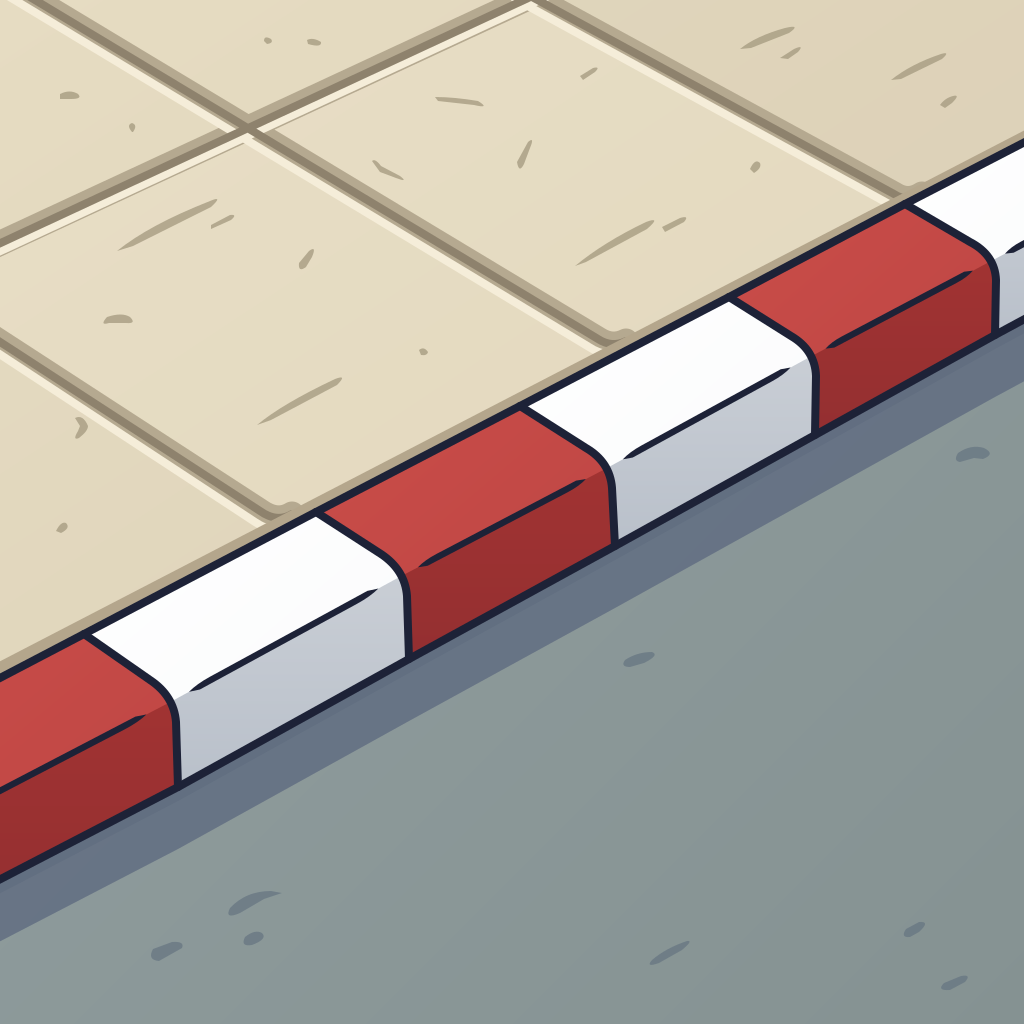
A red-and-white painted kerb is the strictest kerb-side rule in Thailand: no stopping at all, day or night.
Do not stop, do not drop off, do not wait. Drive past and find a legal kerb stretch.
Black-and-white kerb
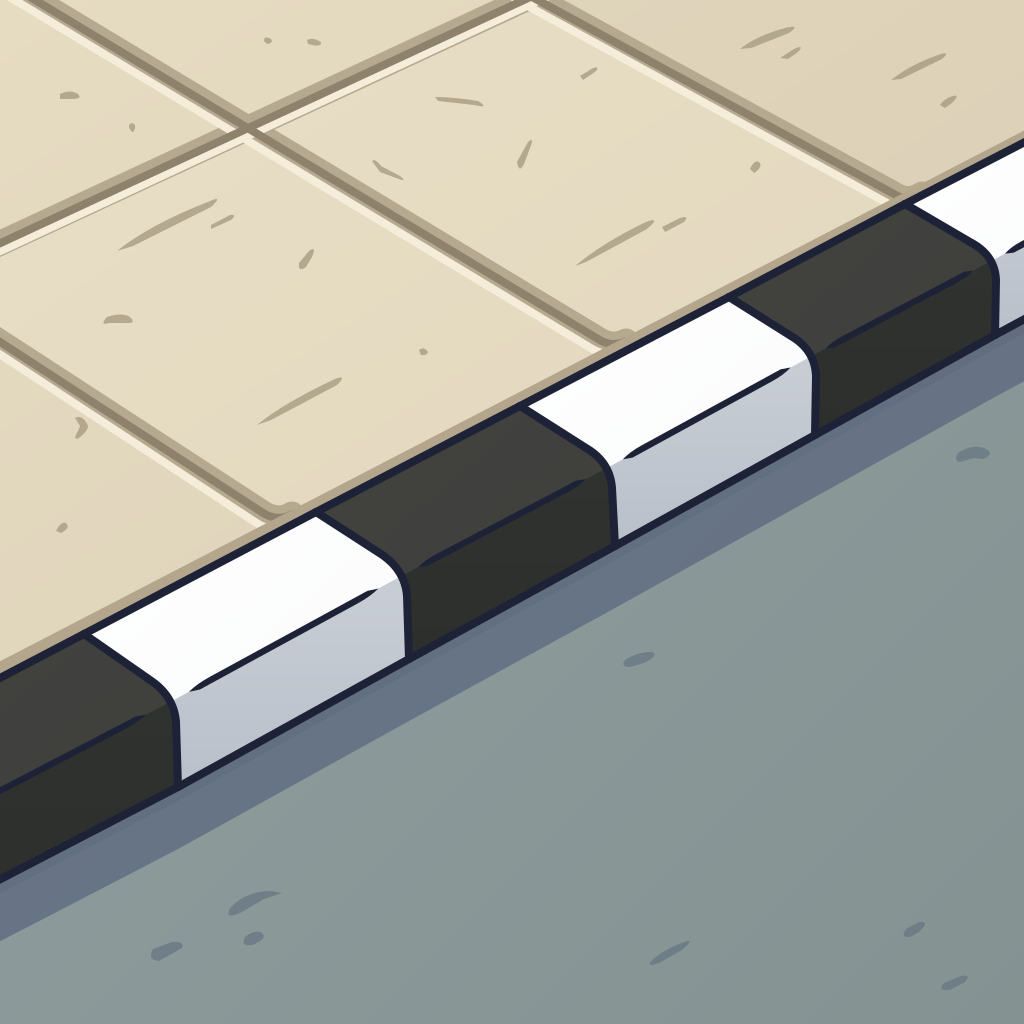
A black-and-white painted kerb is a general visibility / hazard marker, not a stand-alone prohibition.
Treat it as a caution: kerb edge, narrow point, or fixed obstacle. Posted signs override.
Lines on the road
The lines do most of the talking.
Centre lines, junction paint, lane reservations, and the Thai-language words painted onto the asphalt. Solid means no, dashed means maybe, double yellow means absolutely not. The painted words tell you the next move before you reach the related sign.
Broken yellow line
Broken yellow centre line separating opposite-direction traffic (Thai เส้นเหลืองประใส).
Keep left as default. You may cross to turn right or to overtake when the road ahead is clear.
Single solid yellow line
Continuous single yellow centre line separating two-way traffic (Thai เส้นเหลืองทึบเดี่ยว).
Stay on your side. Do not cross or overtake across it; turn across only at marked junctions.
Double solid yellow line
Two continuous yellow centre lines for opposite-direction traffic (Thai เส้นเหลืองทึบคู่).
The strictest Thai centre-line rule: do not cross, overtake, or turn across opposing traffic.
Double line with broken yellow
One solid yellow line beside one broken yellow line; the rule depends on which side faces your lane.
Solid on your side: no crossing. Broken on your side: overtake only when the road ahead is clear.
Broken white line
Broken white lane line for same-direction traffic (Thai เส้นขาวประใส), used for lane separators.
You may change lanes across it; signal early and only move when the gap is genuinely safe.
Solid white line
Continuous white lane line for same-direction traffic (Thai เส้นขาวทึบ), marking through-lanes.
Do not cross or change lanes across it; cross only in an emergency or for a lawful direction.
No-stopping grid area
Yellow intersection box with cross-hatching (Thai เส้นทะแยงห้ามหยุดรถ) for keep-clear zones at junctions.
Do not stop inside it for any reason, including while waiting to turn right at the lights.
Safety zone (yellow)
Yellow-bordered road area with continuous diagonal stripes (Thai เขตปลอดภัย) at gore points and motorway splitters.
Do not drive, park, or stop inside; pass on the legal side for your lane.
Safety zone (white)
White-bordered island with diagonal white stripes, painted at refuges where the marking colour is white instead of yellow.
Do not drive, park, or stop inside; pass on the legal side for your lane.
Rumble strips
Close white transverse stripes painted across the lane (Thai สั่นเตือน). Tyres vibrate over them as a warning, not a physical speed bump.
Lift off, scan for the hazard the cluster is flagging, and slow down before reaching it.
Stop line
Continuous thick white line painted across the carriageway before a stop sign, traffic light, or junction.
Halt before the line. Cross only when the signal allows it or when continuing does not obstruct traffic.
Give-way line
Two rows of short white dashes painted across the lane before a junction with priority traffic.
Slow down on approach. Stop if entering the junction would obstruct cross traffic or pedestrians.
Give-way triangle
Large inverted white triangle painted before a dashed give-way line, often paired with a Give Way sign overhead.
Slow down on approach and yield to priority traffic; stop if entering would obstruct vehicles or pedestrians.
Zebra crossing
Thick white parallel bars across the carriageway (Thai ทางม้าลาย): the designated pedestrian crossing.
Give way to anyone on or stepping onto it. Approach slowly enough that you can always stop in time.
Bus-lane marking
Yellow BUS text inside a yellow-bordered lane (Thai ช่องเดินรถประจำทาง) for authorised buses.
Stay out during posted bus-lane hours. You may enter only to turn, avoid obstruction, or obey an officer.
Car pool lane
White diamond lane marking (Thai ช่องเดินรถมวลชน), reserved for posted vehicle types or minimum occupancy.
Use it only if your vehicle type or passenger count matches the rule on the lane-side sign.
Bridge-ahead marking
Road-surface warning combining an arrow and the Thai word สะพาน ('bridge') painted in the lane.
Expect a bridge ahead: narrower carriageway, expansion joints, reduced shoulder, and possible wind exposure.
Railway crossing
White X with R R road marking (Thai เส้นทางรถไฟผ่าน), warning of a rail crossing ahead.
Slow down, check both directions, and stop at least 5 m from the rails if a train or signal is present.
Beware-children marking
Painted Thai words เด็ก ('children') and ระวัง ('caution') across the lane: a child-presence warning.
Slow down and watch for children. Common near schools, residential streets, and pedestrian areas.
Stop text marking
The Thai word หยุด ('stop') painted large across the carriageway as a halt-before-junction warning.
Halt before the marking, then proceed only when it is safe. Usually paired with a stop sign or stop line.
Drive-slowly text marking
The Thai phrase ขับช้าๆ ('drive slowly') painted large across the lane.
Reduce speed through the marking. Common near schools, sharp curves, narrow roads, and other risk areas.
Reduce-speed text marking
The Thai words ลด / ความ / เร็ว painted in sequence across the lane, together meaning 'reduce speed'.
Begin slowing at the first word and keep braking through the marking until you reach the target speed.
Pattern recognition beats memorisation.
You know the painted patterns. Test that recognition in the free diagnostic, then review the road signs that appear beside them.