Overtaking rules, without doubts.
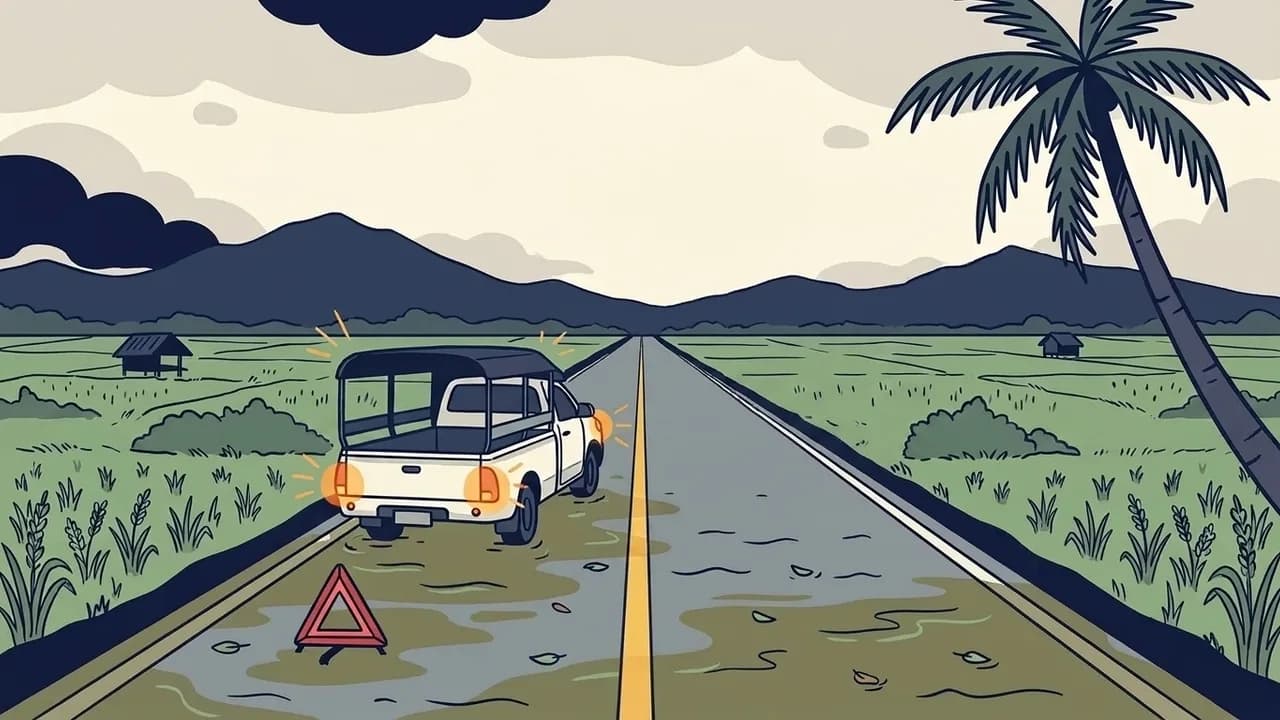
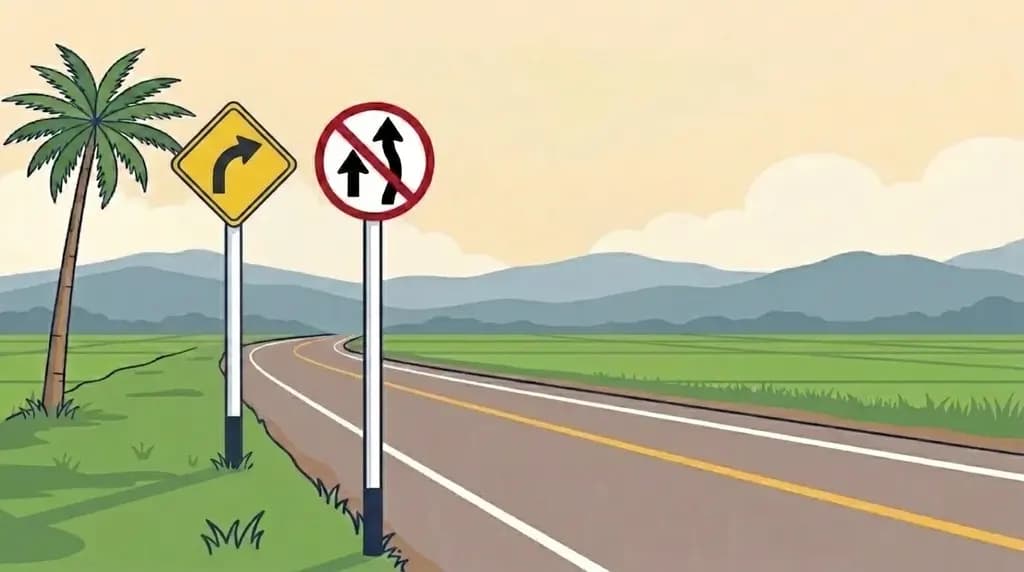
Overtaking on the Thai theory test is allowed on the right, with a clear forward view, where no solid centre line, sign, bridge, junction, tunnel, or crest forbids it. If forward visibility falls below 60 metres (fog, rain, dust, smoke), overtaking is prohibited regardless of where you are.

Sample questions
Try 5 overtaking questions
Try a choice and the answer reveals inline, or open the panel directly. Exam-style wording, with the explanation right below.
Overtaking
Which behavior is considered poor practice when overtaking another vehicle?
Show answer & explanation
Correct answer
D · Pulling sharply back in front of the overtaken vehicle as soon as you pass it
After overtaking, you must leave enough space before returning to the left lane — cutting back in immediately puts the vehicle behind you at risk of a collision. Good practice is to wait until the overtaken vehicle is visible in your mirror before moving back.
Overtaking
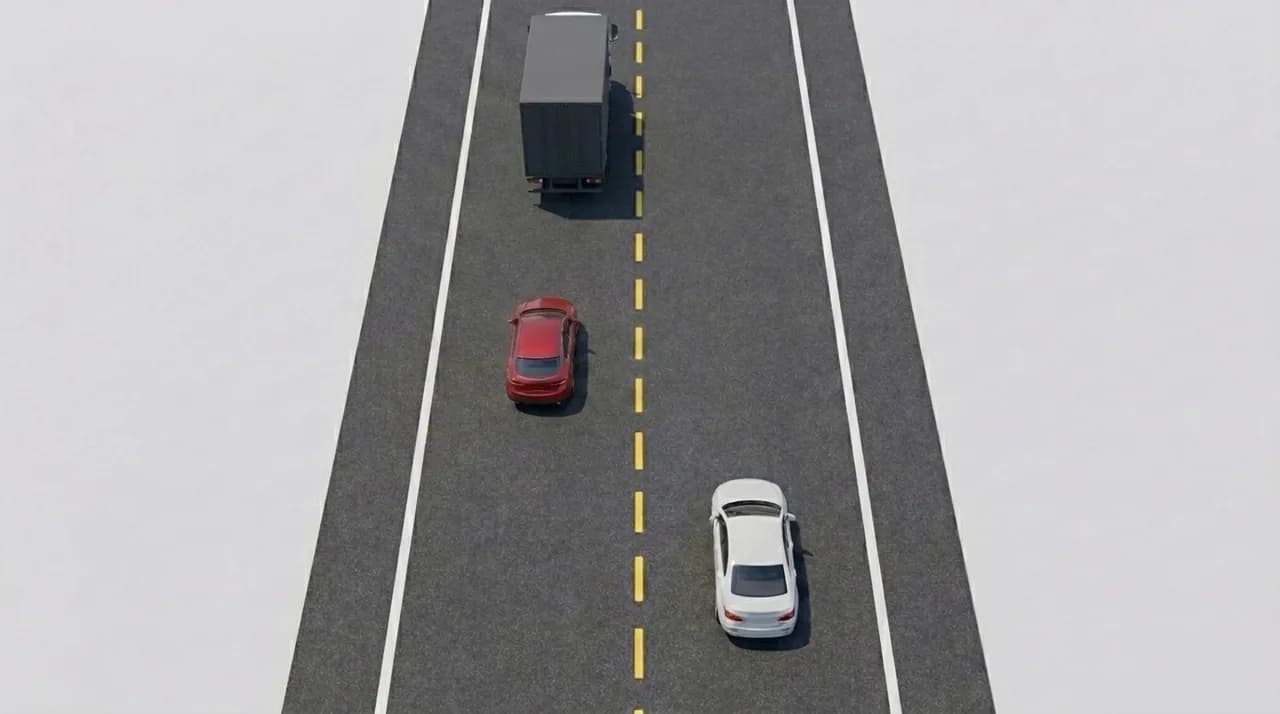
You intend to overtake, but the vehicle behind you has already started overtaking your vehicle. What should you do?
Show answer & explanation
Correct answer
C · Wait until the vehicle behind has completed its overtake, then overtake only when safe.
A driver must not begin overtaking when another vehicle behind is already overtaking them. Wait until that vehicle has completed the manoeuvre, then check again and overtake only if it is safe and lawful.
Overtaking
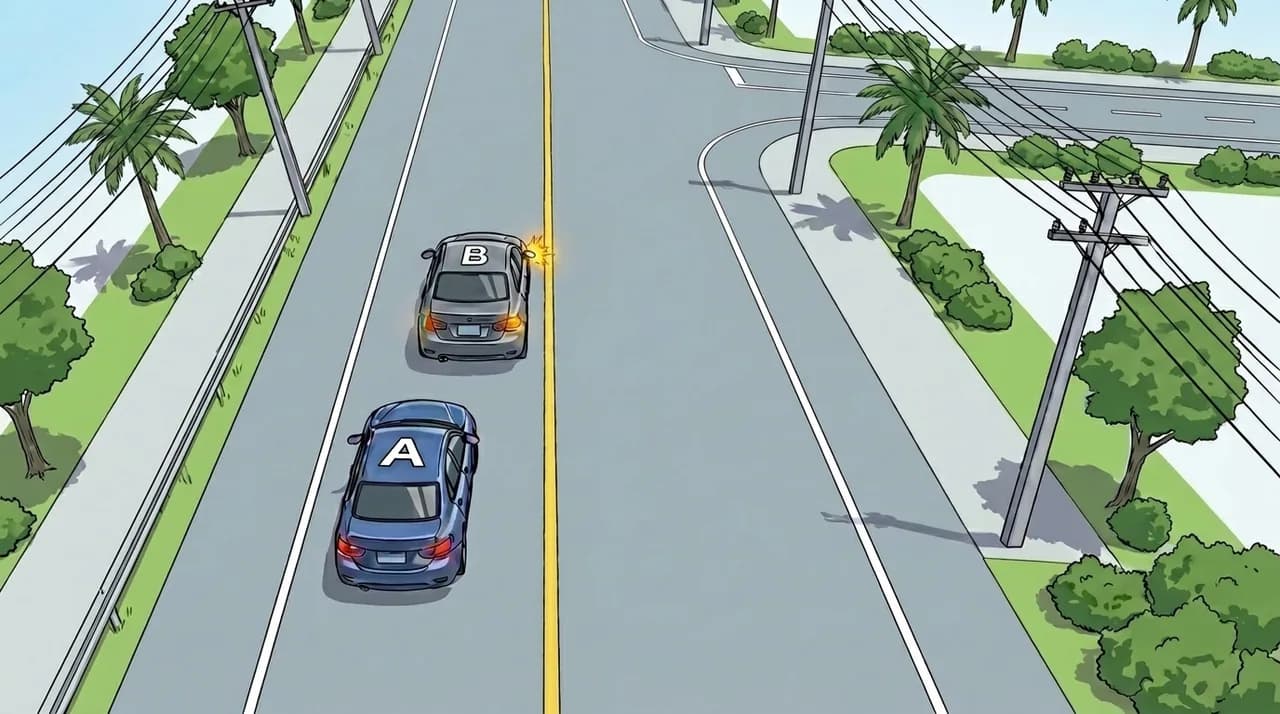
Car A is driving on a two-way road with one lane in each direction. Car B is ahead of Car A. When may Car A pass Car B on the left?
Show answer & explanation
Correct answer
C · When Car B is turning right or signalling to turn right, and it is safe to pass on the left
In Thailand, overtaking is normally done on the right. Passing on the left is allowed when the vehicle ahead is turning right or has signalled a right turn, provided it can be done safely. Passing on the left is also allowed on roads with two or more lanes in the same direction, but this question says there is only one lane in each direction.
Overtaking
Before deciding to overtake another vehicle, which of the following does NOT need to be assessed?
Show answer & explanation
Correct answer
A · The stopping distance of your vehicle
Stopping distance is not a factor you assess before overtaking — the key checks are forward visibility, the size of the vehicle being passed, and whether the location permits overtaking. Sight distance (how far ahead you can see) is relevant, but stopping distance is not part of the overtaking decision.
Overtaking
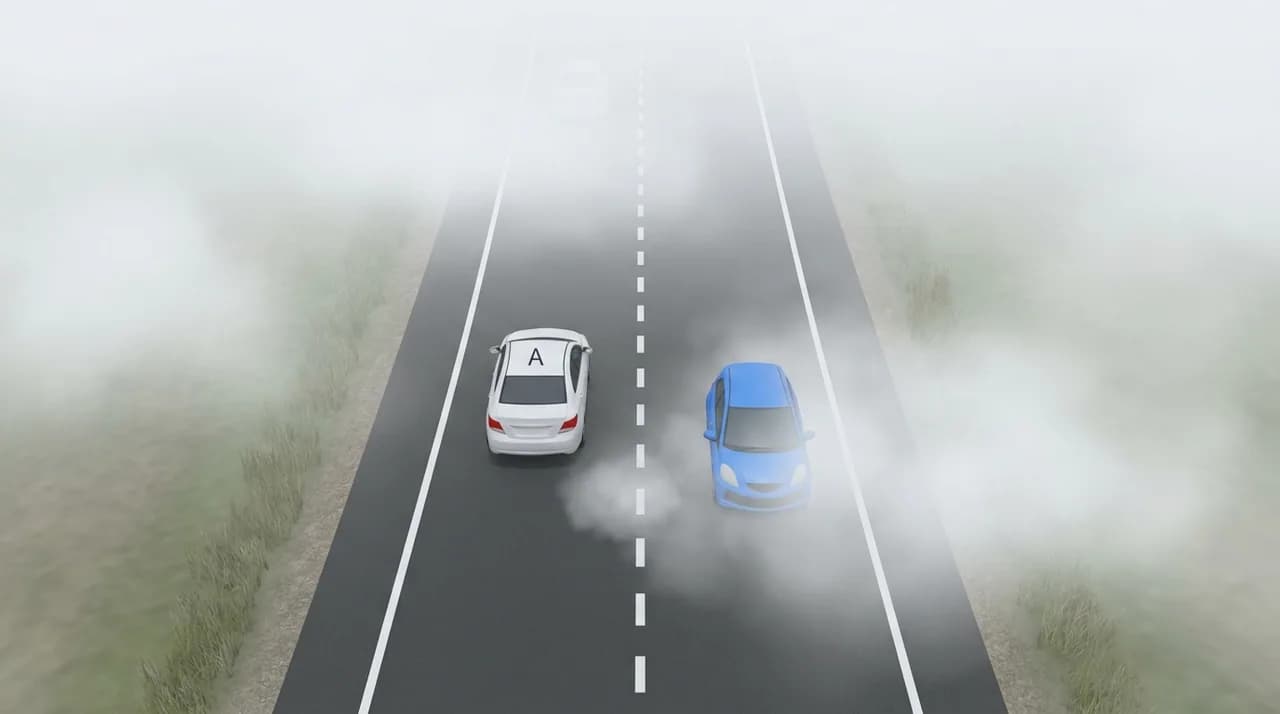
Under traffic law, overtaking is prohibited when fog, rain, dust, or smoke reduces forward visibility to less than how far?
Show answer & explanation
Correct answer
A · 60 metres
Thai law prohibits overtaking whenever poor weather conditions limit forward visibility to less than 60 metres. At that distance, there is insufficient sight line to safely complete a pass.
The free diagnostic checks ten questions across topics to spot weak areas.
Rule pattern
If anything blocks the view or the line, don't.
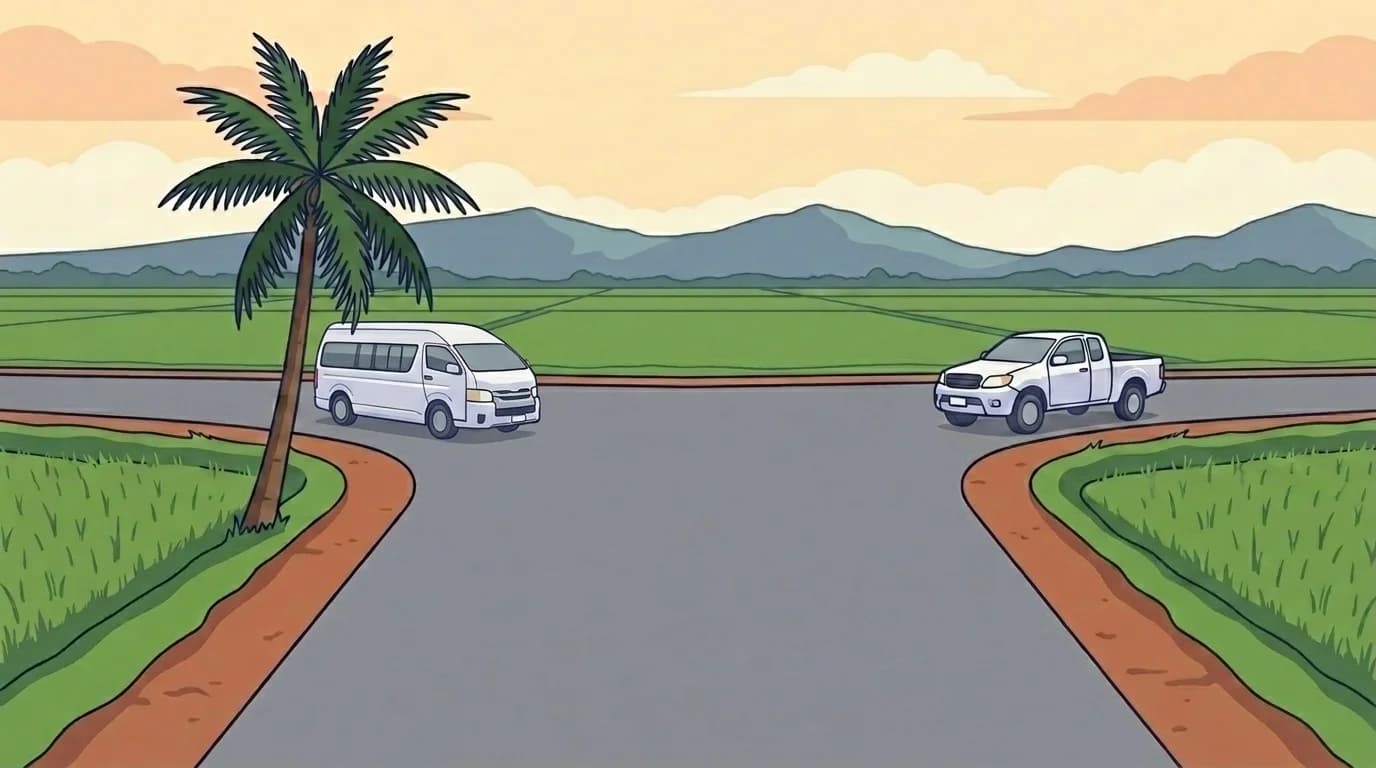
Solid line, crest, bridge, junction, tunnel, below 60 metres forward sight, another car already overtaking you: every one of these turns the answer into 'not allowed.' The theory test treats overtaking as the default-forbidden action.
When you're allowed to pass, when you're not, and the visibility numbers the wording quietly relies on. The trap is almost always in the exceptions.
Written by a farang who failed once. Independent of the Thai Department of Land Transport. About FarangDrive.
FAQ
Common overtaking questions
Real questions foreigners ask before the theory test. Practice content is based on common Thai driving-test topics and public guidance; it is not an official exam database.

Which side do I overtake on in Thailand?
On the right. Overtaking on the left is only allowed when the vehicle ahead is signalling a right turn or has its right-turn signal on.When is overtaking forbidden?
Across a solid centre line, on bridges, in tunnels, at junctions, on crests, at level crossings, and any time forward visibility is below 60 metres.What's the visibility rule the test keeps asking about?
You need a clear forward view of at least 60 metres before overtaking. When fog, rain, dust, or smoke drops visibility below that, choose the cautious answer: do not overtake.
Now run them under pressure.
Try 5 samples here. The free 10-question diagnostic spots weak topics, then Practice helps you work on them.