Motorcycles on Thai roads, decoded.
On the Thai theory test, motorcycle questions test two things: how a car driver should leave space and visibility for motorcycles, and how a rider should stay visible. The recurring rule is 'small profile equals easy to miss': slow down, check twice, leave room.

Sample questions
Try 6 motorcycles questions
Try a choice and the answer reveals inline, or open the panel directly. Exam-style wording, with the explanation right below.
Motorcycles
You are driving behind a motorcycle on a road with potholes and an uneven surface. What should you do?
Show answer & explanation
Correct answer
C · Increase your following distance in case the motorcycle suddenly steers around a pothole.
On rough or potholed roads, motorcycles may swerve sharply without warning to avoid hazards. Increasing your following distance gives you enough space to react safely.
Motorcycles
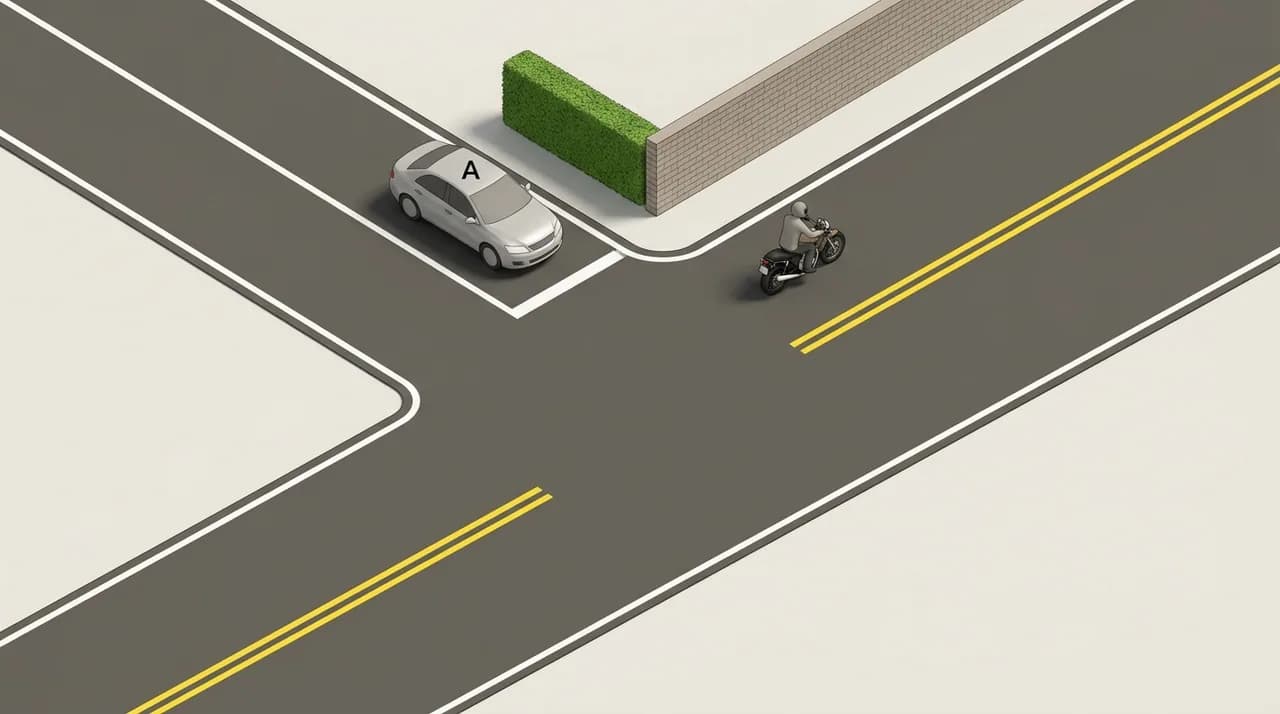
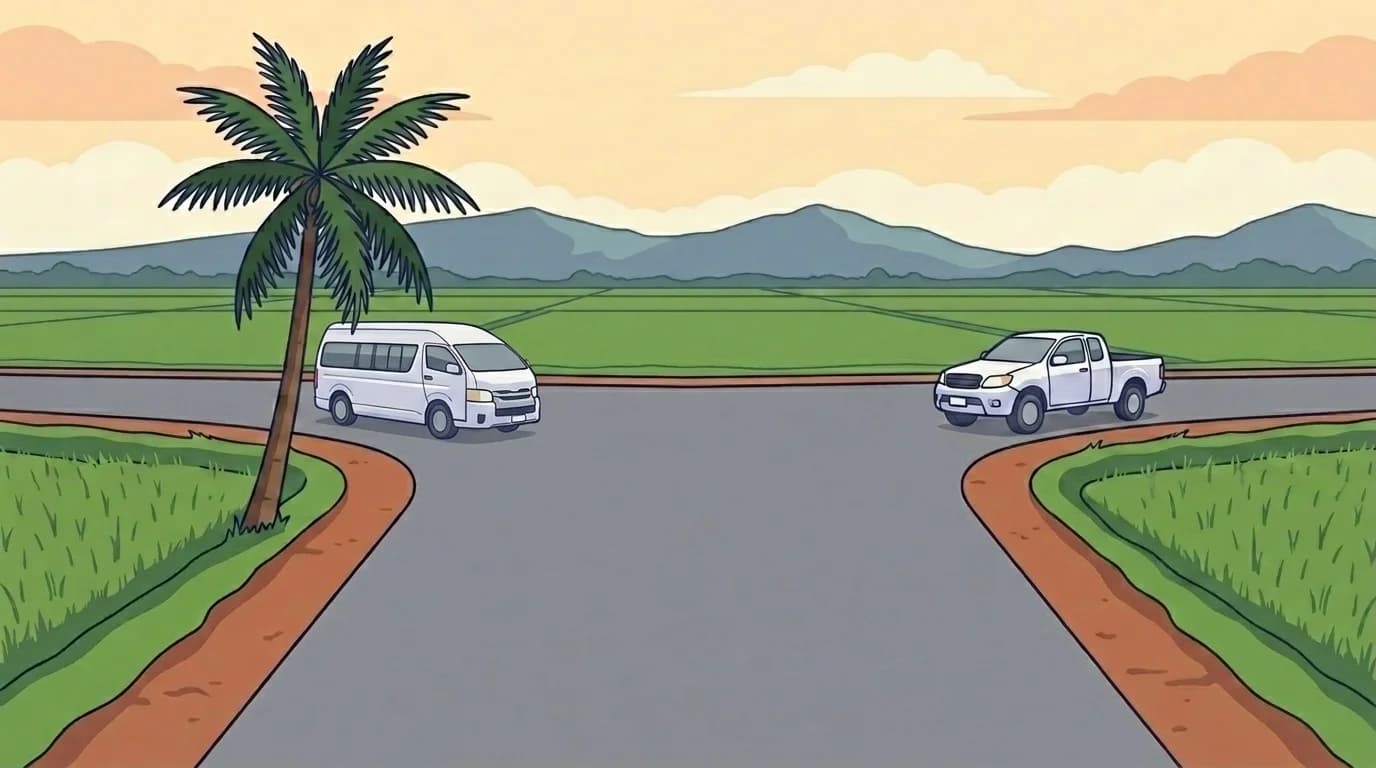
You are pulling out of a side road onto a main road. Why do motorcycles require extra attention compared to other vehicles?
Show answer & explanation
Correct answer
B · Their small size makes them easy to miss behind walls, parked cars, or other obstacles.
Motorcycles have a narrow profile, so they can be completely hidden by roadside obstacles until they are very close. This makes a careful, slow approach essential when emerging from a side road.
Motorcycles
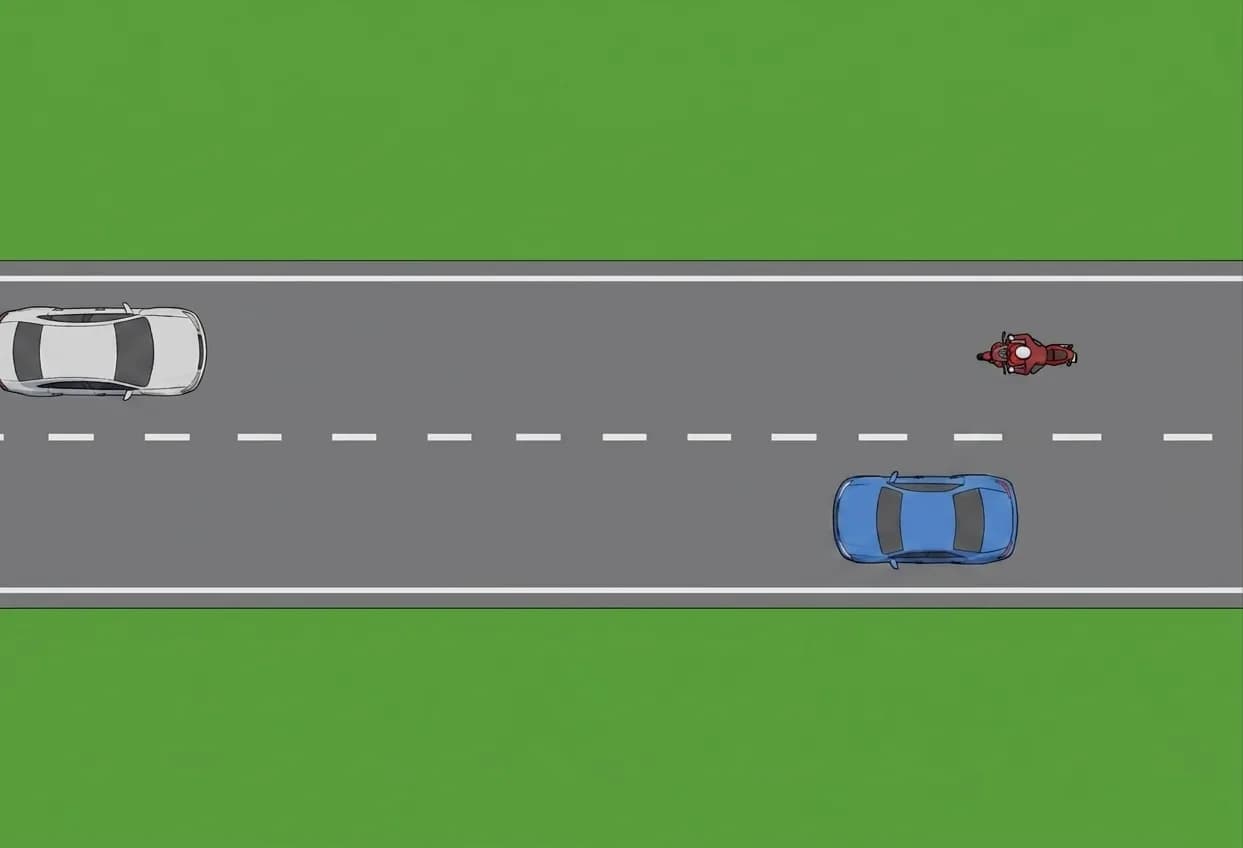
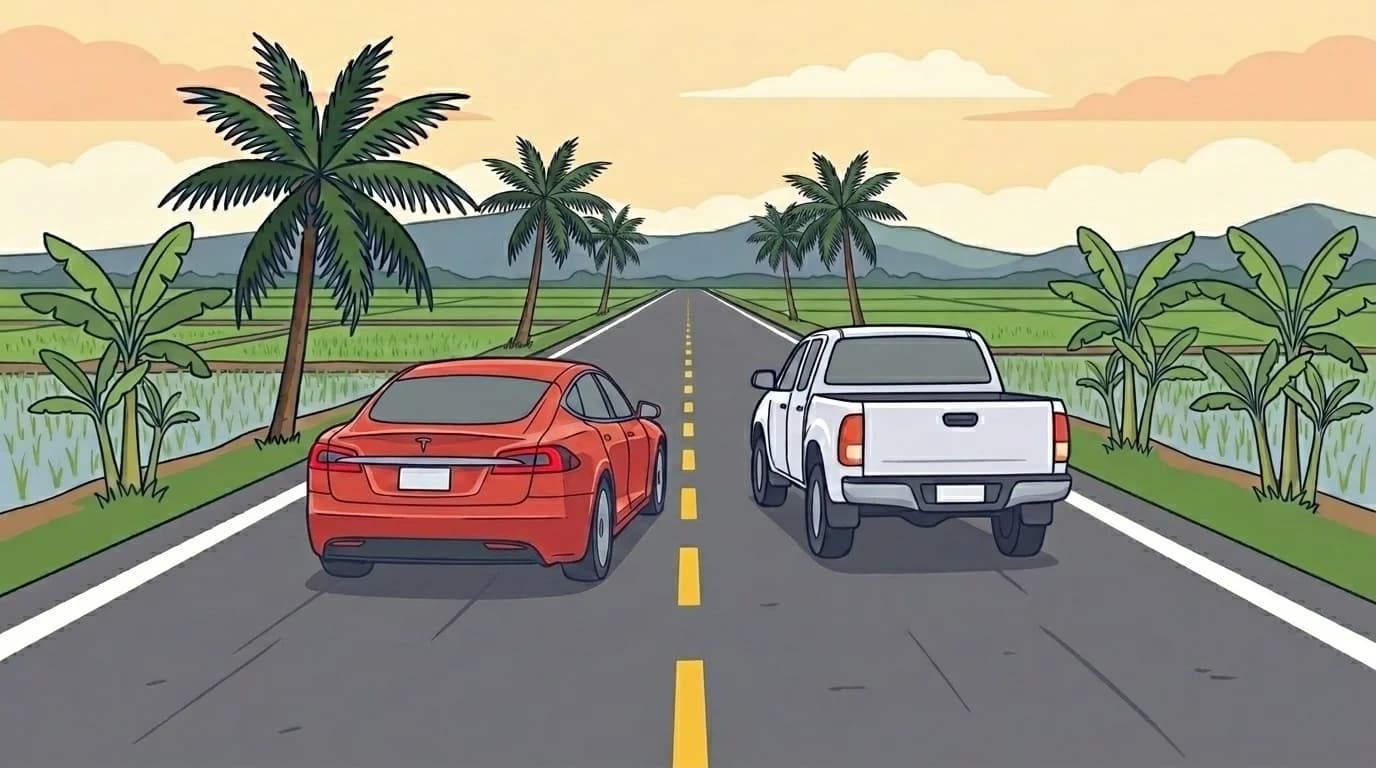
A motorcycle is overtaking your car when oncoming traffic appears ahead. What should you do?
Show answer & explanation
Correct answer
A · Reduce your speed and move left to give the motorcycle room to complete the overtake.
When a motorcycle is mid-overtake and oncoming traffic appears, you must slow down and move left so the motorcycle can complete the maneuver safely and return to the correct lane. Stopping abruptly or moving right creates a greater collision risk.
Motorcycles
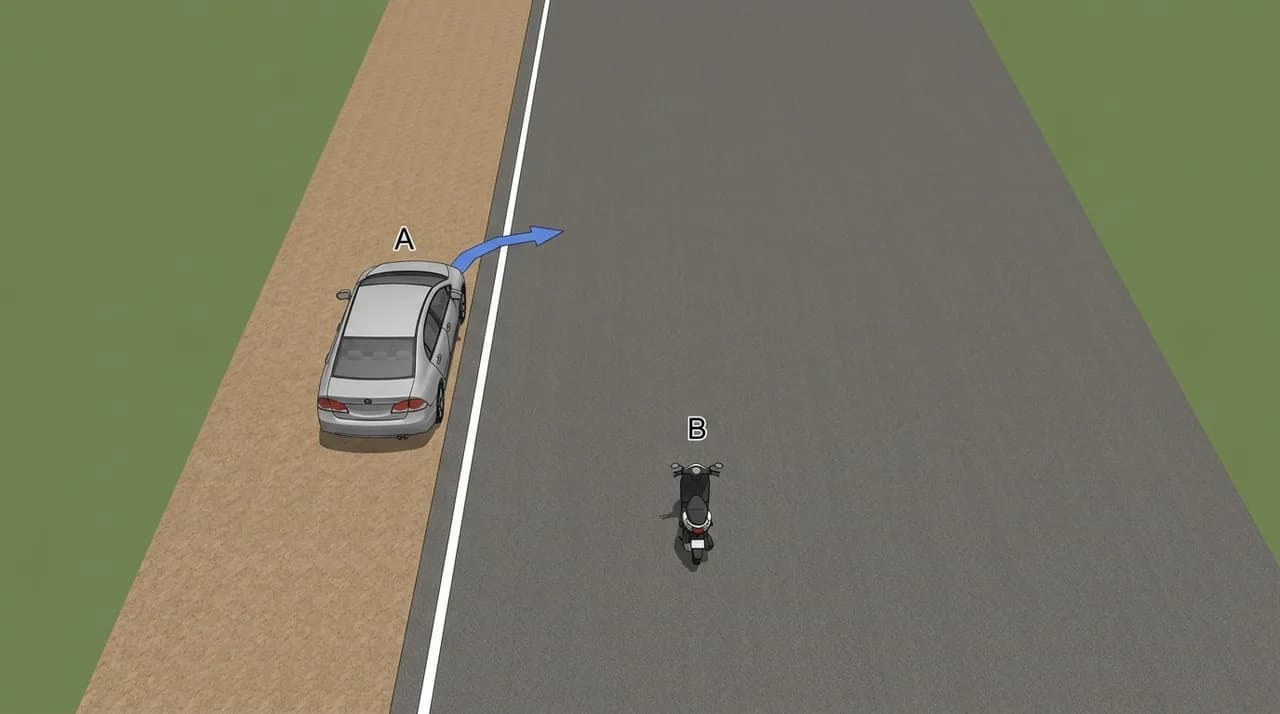
You are about to move away from the roadside curb. Why should you pay special attention to motorcycles before moving?
Show answer & explanation
Correct answer
B · Their small size makes them difficult to see in your mirrors and blind spots.
Motorcycles have a narrow profile that makes them easy to overlook in mirrors and blind spots when pulling out from the curb. Checking carefully before moving reduces the risk of a collision with an approaching rider you may not have seen.
Motorcycles
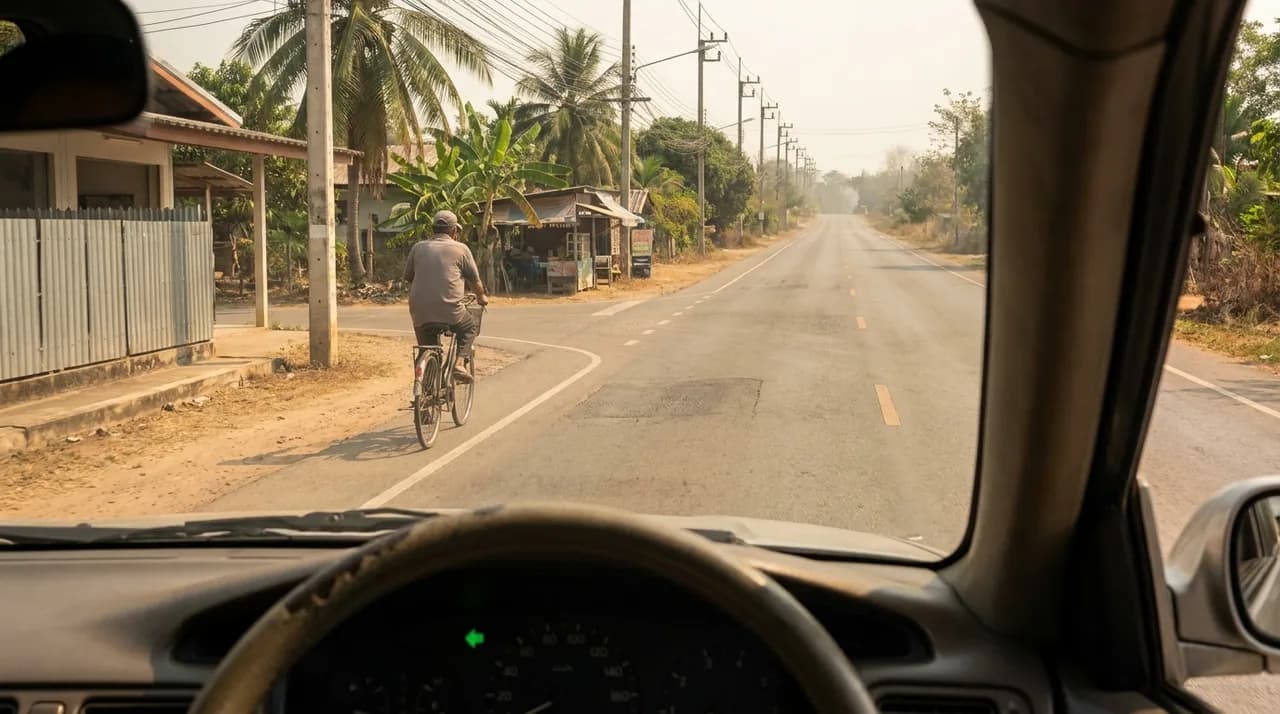
You are driving on a two-lane road and a cyclist is just ahead of you. You are approaching a left turn. What should you do?
Show answer & explanation
Correct answer
B · Stay behind the cyclist and do not overtake before turning left.
Overtaking a cyclist just before a left turn forces you to cut across their path as you turn, creating a serious collision risk. You must stay behind the cyclist until the turn is complete.
Motorcycles
What restriction does this sign impose on drivers?
Show answer & explanation
Correct answer
B · Only motorcycles are prohibited; cars may proceed normally.
The sign shows a motorcycle crossed out inside a red prohibition circle, meaning motorcycles are prohibited from entering or travelling on the road ahead. It does not prohibit cars.
The free diagnostic checks ten questions across topics to spot weak areas.
Rule pattern
Small profile, big risk.
Motorcycles disappear behind parked cars, in mirrors, and in blind spots faster than any other vehicle on the road. The Thai theory test rewards drivers who acknowledge that fact: slow down, check actively, give extra room.
Motorcycles are everywhere on Thai roads, and a chunk of the theory test asks how cars should handle them, and how riders should behave around cars. These are the questions that come up most.
These are exam-style motorcycle questions. A car licence does not cover motorcycles or scooters; the motorcycle category is handled as its own licence category.
Written by a farang who failed once. Independent of the Thai Department of Land Transport. About FarangDrive.
FAQ
Common motorcycles questions
Real questions foreigners ask before the theory test. Practice content is based on common Thai driving-test topics and public guidance; it is not an official exam database.
Do I need a separate licence for a scooter in Thailand?
Yes. A scooter or motorcycle needs the motorcycle category. A car-only licence, whether Thai or foreign, does not cover two-wheeled motor vehicles.Is the motorcycle theory test easier than the car one?
Same format, similar length, similar style. The car rules carry over; the difference is a handful of motorcycle-specific items on helmets, pillion passengers, and lane position.Will my insurance pay if I ride a scooter on a car-only licence?
Do not assume it will. Thai motor policies and travel or expat policies usually require the licence category to match the vehicle. Check the actual policy wording before riding; without the motorcycle category, a claim can be refused.
Now run them under pressure.
Try 6 samples here. The free 10-question diagnostic spots weak topics, then Practice helps you work on them.